
EOS Explained
What Makes EOS Work?
By Sylvie Cowell 3 min read
Most business frameworks promise transformation and deliver a binder full of templates. The Entrepreneurial Operating System is different—not because every idea is revolutionary, but because its tools are designed to be used together, week after week.
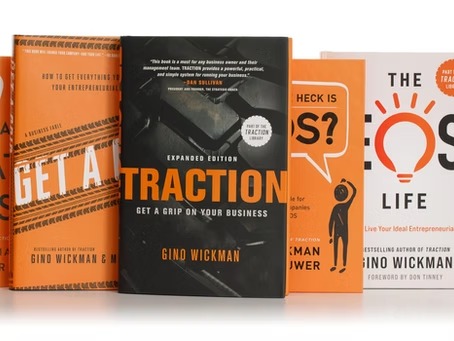
For businesses that commit to EOS, the difference is not a single clever exercise. It is the way six key components—Vision, People, Data, Issues, Process and Traction—reinforce one another.
So what makes EOS work where other systems often fall flat?
It starts with a shared vision—not just a mission statement
Businesses rarely stall because they lack ambition. More often, the leadership team and wider organisation are quietly pulling in different directions. EOS tackles that directly by defining where the company is going and how it intends to get there.
The Vision/Traction Organizer (V/TO) brings the core values, Core Focus, long-term targets, marketing strategy, three-year picture, one-year plan, quarterly Rocks and key issues into one concise document. When those choices are understood throughout the business, alignment becomes operational rather than aspirational.
Accountability becomes structural, not cultural
Most businesses say accountability matters. EOS builds it into the operating rhythm. A weekly Scorecard keeps a small number of meaningful measures visible. Quarterly Rocks turn longer-term goals into focused 90-day priorities. Every measurable and every Rock has one owner.
That reduces ambiguity. Progress is no longer a matter of confidence or presentation; it can be seen, discussed and acted on.
The right people are placed in the right seats
A sound strategy still fails when people do not share the organisation’s values or cannot consistently deliver what their role requires. EOS separates those two questions: whether someone is a Right Person for the culture and whether they are in the Right Seat.
The People Analyzer and Accountability Chart make those conversations clearer. Used honestly, they reveal whether the structure supports the plan—or whether the plan is asking the wrong people to carry it.
Issues get solved, not shelved
Every business has problems. The difference is whether they are named early and solved at their root. EOS uses a visible, prioritised Issues List and the IDS process—Identify, Discuss, Solve—to keep the conversation focused on the real issue rather than its symptoms.
This gives leadership teams a shared method for working through tension, making decisions and leaving the room with a clear action.
Meetings actually move things forward
Poorly run meetings drain energy because they mix updates, debate and decisions without a dependable structure. The weekly Level 10 Meeting uses the same agenda and the same sequence: review the Scorecard and Rocks, share headlines, then devote the majority of the time to solving the most important issues.
Consistency is the advantage. The team knows where information belongs, where issues will be addressed and how actions will be followed through.
Processes become assets, not tribal knowledge
Scaling becomes fragile when critical knowledge lives only in people’s heads. EOS asks the business to identify its small number of core processes, document the essential steps and ensure they are followed consistently.
The aim is not bureaucracy. It is a dependable way of working that improves training, protects quality and allows the business to grow without reinventing delivery every time.
Why it works long-term
EOS is not a one-time initiative. It runs on a 90-day cadence of planning, execution and review, supported by a weekly operating rhythm. The business keeps recalibrating without losing sight of the longer-term vision.
For businesses that feel stuck, scattered or ready for a more disciplined way of operating, that combination is powerful. The framework does not do the work for the team. It gives the team a practical structure within which the right work is harder to avoid.
EOS sticks because clarity, ownership and follow-through are not left to intention. They are built into the week, the quarter and the way the leadership team works together.